There are two places in the bible where Jesus is recounted as saying, “He that hath an ear, let him hear what the Spirit saith unto the churches. Revelations 3:22″
Why was this remark made? The reception of the gospel is not by duress. It is of great necessity, but optional to align with what the Spirit of God is saying. And sometimes the instruction of God may be difficult to accept, but then again, he that has ears let him hear.
What do we need to hear? There is no place in heaven for believers, pastors, and members who live in grudges, malice and have a heart of unforgiveness.
Grudges are simply past wrongs we still carry in our hearts, making it hard for us to relate well to those who have wronged us. It could be family, relatives, fellow preachers or fellow believers.
Will people wrong us? Yes! Offences must come, Jesus said (Luke 17:1), but then love covers a multitude of sins and offences. The question is, do we even have God’s imparted love in us? If yes, grudges should be dead and crucified to us.
The Bible encourages us to forgive and to let go of the offences meted out on us by others. This is Christ’s nature. But the question here is, are we true Christians? Are we Christ-like indeed, or by mouth? If we are positive about the life and Spirit of Christ in us, forgiving others should not be too difficult for us.
Matthew 6:14 tells us that when we forgive others their trespasses, God will also forgive us our wrongs. Another question here – Do we even know that we have personal faults, and that we need God’s forgiveness when we default?
What if those who wrong us do not apologise? Herein is mercy tested with us. Mercy does not always count on the apology or recognition of faults by the defaulter. Mercy overlooks wrongs and continues on the path of love and peace. If we, as believers, will show others mercy, God will, in return, show us mercy: Covering some of our faults.
It is not an easy thing to forgive and put away grievous offences, but we rely on the Spirit of God to help us overcome our humanity. The knowledge of God’s word will also help guide our hearts unto purity. For only those whose hearts are pure shall see God. – Matthew 5:8
Finally, our resolve to run the Christian race and to make it into the Kingdom should convince us on the matter of letting go of offences. Especially when we know that there is no place in heaven for believers who live with grudges.
Why is it that believers often take money from their fellow believers or brothers and fail to make any attempt to pay it back? I have noticed this tendency among believers, even pastors. This strikes me as a form of wickedness.
Wickedness simply means to treat others in ways we would hate to be treated. So is borrowing and not paying back.
When I was young, I once witnessed a brawl among members of the same church after a service. It turned out that one brother had borrowed money and refused to pay it back. In an attempt to recover his money, the lender resorted to violence.
A pastor once approached me during a difficult season and asked to borrow some money. We agreed on a specific time for repayment, but that time came and went without him repaying the loan or even apologising for not honouring our agreement. Four years later, he still has not paid me back.
I also lent money to another supposed pastor with the agreement that he would pay me back. Many months have passed, and he has not returned the money. He earns a salary, has a family he takes care of, but making the payment is difficult for him.
Another believer called me and begged me for assistance to attend a program, promising to return it after a month. Until today, he still has not paid me back.
Why is it that believers who borrow from each other do not pay back what they borrowed? In their indebtedness they manage to afford food, pay rent, make trips and cover other expenses, yet cannot repay the money they borrowed during difficult times. This behaviour is ungodly and unchristlike and is an act of wickedness.
The wicked borrows and does not repay, but the righteous shows mercy and gives. – Psalm 37:21
Let us remind all believers that the scriptures indicate that borrowing without repaying is the way of the wicked. It is wicked pastors and wicked believers that borrow from their fellow believers and refuse to payback. And if the scriptures call them wicked, I wonder how they think to themselves that they are still sons of God and are heaven bound in while in their wickedness. Unless we are deceiving and flattering ourselves in evil.
Matthew 7:12. Therefore, whatever you want people to do to you, do also to them, for this is the Law and the Prophets.
Today, we will unravel a mystery – spider web witchcraft. A phenomenal and universal witchcraft with a mysterious implication. If you are currently struggling with it, know that it signifies something extraordinary and starry about your existence on Earth. Satan does not have time for those nobodies. If the powers of hell are after you, you are a carrier of something great.
There is a witchcraft called spider web sorcery. It is a very potent weapon of warfare used by the forces of the dark age against believers. Sometimes, unbelievers who carry the star of God also come under this attack.
There are unbelievers who have an appointment with destiny according to the will of the maker. Many are still lost in the world, not knowing that they are potentially great vessels in the hand of the Lord. These are the lost sheep we must find with great urgency.
Spider sorcery is the sorcery of spiritual and physical limitations, entrapment and setback. It is used to manipulate the life of a person against any kind of progress, spiritually or physically. The life of such a person will be caught in satanic webs, persistent fails and merry-go-rounds. It is also used to project losses.
Major targets of this witchcraft
The first targets of the voodoo are those who are doing well financially and are prospering in their endeavours. When their enemies do not want their further progress, spider web sorcery is deployed to catch them and stop their flight.
Also, Christians who are striving spiritually and are showing strong signs of growth and progress become victims. They must never be allowed to reach their full potential. More also are servants and ministers of God. The enemy would want to stiffen, frustrate and suffocate their spiritual labour.
Note that this sorcery does not work only on believers. Any unbeliever greatly bedevilled by webs is a potential great person and one with a bright future. Unluckily for him, since he has not anchored in Christ, the solid rock, his enemies will succeed in taming his future, limiting him and making him wretched and poor.
I was once invited by an elderly man, probably in his early sixties. He openly wept in public about his misfortunes. He had once been wealthy, a member of the Assemblies of God Church, and had owned a few properties. Today has become wretched and poor. Additionally, he has developed a drinking problem.
I asked him if spider webs were occasionally coming on him, and he replied yes. He went on to describe how he was greatly molested by spider webs. It’s important to note that he is no longer a Christian, yet his enemies insist that he will die destitute.
Some think to themselves that running away from God will give them liberty. Not for those who are stars by divine making and have enemies who want their downfall.
He shared with me that whenever someone gives him money as aid, some unexpected problem would arise and consume the entire amount he received. This has been the story of his life. No matter how much aid he receives, he cannot make progress.
Potentialities of this spiritual attack include:
Covers the glory of a victim.
Causes delay of good things in the life of a victim.
Abortion of profitable opportunities.
Causes frustration in the attainment of goals.
Much struggles with little results
Bad luck dodges the footsteps of the person.
Hatred marks comes upon the person.
Rejection sets in.
Stagnancy in all critical areas of life.
Invisible to helpers.
Spiritual blindness comes upon the person
Spirit of mistakes and errors bombards the victim.
Journey to poverty begins unless reversed.
Unemployment chances for profitable employment are always blocked.
Abortion of virtues and talents of a victim.
Experiences unfulfilled promises
Covered from good things.
Always victimised innocently.
Inability to meet with good people or things in life.
Road of destiny always blocked.
Good things get finished before it gets to the turn of the victim.
Helpers disappoint victims at the dying minute.
Goods and wares are left unsold until they expire.
People pick offence and quarrel with the victim over trivial matters.
Good doors are shut at the person.
Inability to find a spouse.
Good business proposal left unattended until ideas are utilised by others.
Always joined with destructive friends and relatives.
Dreams of limitations without seeing the power behind it.
Backwards or stagnant spirituality.
Loss of faith in God.
A projection from the Spirit world into the physical realm
Those who experience this attack will tell you that they get caught by spider webs everywhere they go. In open spaces, public areas, and even in places where it is impossible for spiders to build webs, they still get caught by the webs from nowhere.
The most troubling reports come from individuals who complain that even when others have gone ahead of them, they’d be caught in the web when it’s their turn. And they wonder, “Did someone not just pass through this place?” To address these concerns, I will explain why this happens.
Those webs are not placed by spiders. They are spiritual web projections that stay spiritual until they are before the target. Witches use spiders to work the voodoo. But they send out the end product as a spiritual projectile to the potential victim.
Proverbs 30:24-28 acknowledged that spiders are extremely wise little animals. In the making of their webs, they show great dexterity and accuracy. Whatever sorcery is done using spiders will have the same dexterity and pinpoint accuracy against the target victims. That is why no other passerby can be caught in it, but only the target. When the target approaches, the web moves into a physical realm, takes a physical framework, and the target is caught.
Because the webs are spiritually sent, they can be noticed in open fields, on highways, on high seas, in the sky and in places where spider webs should never be seen.
How did I come to know? I used to be heavily attacked by the spider web until the day the Lord granted me authority over it. After that word of the Lord, I reached a level where I could see the webs in their spiritual form, and I was able to destroy them, melting them away.
What to do when you are webbed
As soon as you find yourself caught, take a moment—about five minutes—to pray against physical and spiritual projections of setbacks, stagnation, or limitation. Terms and conditions apply to overcoming any form of witchcraft. Our next post will be more detailed.
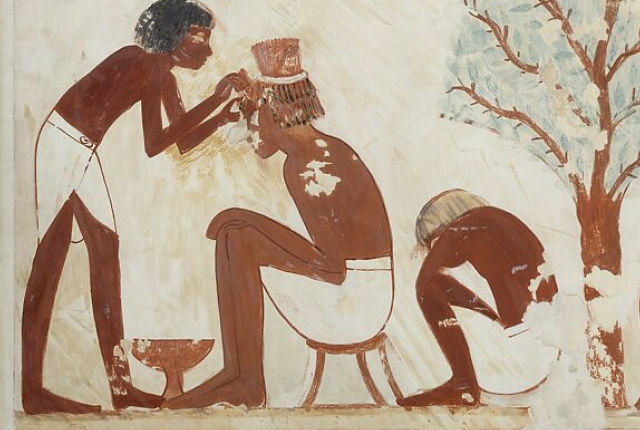
Today, I will be bringing to light a powerful sorcery used by the forces of the dark age against believers. It is a voodoo called ‘spiritual hair cutting’. It is a weapon that can harm any believer, most especially those who are unaware, and those who lack a strong prayer support system. This is a grand witchcraft that can diminish our spiritual strengths significantly.
By now, my readers should be familiar with the fact that there are three types of believers capable of overcoming the wickedness of the devil. The first are those who pray at night. The second are those who pray intermittently, and the third are those who engage in long prayers. This was revealed by a son to an African voodoo priest.
A praying Christian is one positioned to be minimally hit and affected by any spiritual attack. He is one who can resuscitate quicker than others. For those who are not strong, it will take time to restore what was damaged. Another way we can rebuild fast is by a wilful act of God when we beg Him to revive our strength.
The Lord had opened my spiritual eyes to see visions early in life, and I prospered in the power of sight and gained knowledge even unto the secret things of the devil.
There is a sorcery carried out by agents of Satan targeted at those believers who showcase a high level of spiritual wisdom in their service of God. This sort aims to cut off the wisdom and understanding that drives spiritual exercise and service, causing the believer not to perform well when it is required.
It could be strength in prayer, strength in teaching or preaching, strength in understanding scripture, strength in administration, or strength in making psalms and music unto the Lord.
We must realise that nothing positive happens without the application of wisdom. Wisdom is a principal thing. Nothing works both spiritually or physically without wisdom. And this wisdom is the application of what has been known. The Holy Spirit may teach from the spirit of Man, but the knowledge he passes is deposited in the human mind. And the Spirit of God taps into what is in the mind to help the man showcase wisdom in his spiritual outings and service unto God.
The mind is the key. Witches say, ‘If we can dull the mind, wearing it down and blanking it, so that it is difficult to think sharply and harness what been garnered, we can nullify the Christian.’ Put in another way, ‘If they are not thinking well, they cannot do well.’ This is exactly how this witchcraft works.
What happened to Samson when his hair was cut off? He became like a helpless child in battle. The Lord had bestowed upon his hair the wisdom of warfare and the strength to confront darkness. Once it was shaved off, he lost all of that. On the day his enemies confronted him, he woke up as a man who no longer knew the strategies to defeat his foes.
Our strength is not in our hair, but this is voodoo. Only in the West do men make light of witchcraft, which is why Satan integrated himself into their society. In Africa, we are aware that even a little voodoo can destroy a nation, and condemn a generation to untold misfortunes.
Now the demons that aid its auspiciousness know that even the Spirit of God needs a well-thinking person to perform His work, one who knows what he is doing, and who is able to recall experiences and utilise them efficiently. This is what the demons of this voodoo try to hinder.
How do they do this occult sorcery?
To perform their dark sorcery, witches enter the spirit realm armed with hair-cutting tools, such as razor blades or clippers. They wait for a person to be at rest, either while they are at rest, sleeping or deeply engaged in prayer. There is a state of prayer where, once attained, the individual becomes lost in communion with God. The praying Christian becomes motionless, and only soft mutterings can be heard from him. His consciousness is split between the Spirit and the Physical realm. This is the point where visions become abundant. It is also at this point that the human spirit becomes vulnerable.
As long as the physical body is in motion and fully awake, it is difficult for them to afflict the spirit man, known as the soul. Witches will wait until the soul becomes vulnerable. The soul is just the same as the individual, possessing all the features of the human body, including hair. It is this hair on the soul that they seek to cut off.
How to know your hair has been cut in the spirit realm
There are two main ways to recognise that one’s hair has been shaved off in the spiritual realm, and a third way based on intuition. The first is through dreams. Dreaming of having one’s hair cut, shaved, or partially removed is a sign of this type of sorcery. The second method is through visions. Individuals with spiritual insight can sense when they or others have been attacked, and their hair has been removed.
If there are no dreams or visions indicating such witchcraft, it is advisable to pray for hair restoration, especially when one’s spiritual abilities begin to wane. However, it is important to remember that there are many other reasons why people may lose their spiritual strength.
Overcoming the voodoo of spiritual hair cutting
When you become a victim, you may notice a significant decline in your spiritual abilities and strengths. As a result, you will need to diligently engage in prevailing prayer to regain what has been lost. The battle we are fighting is a war of words, the Spirit said to me. Our utterances during prayer serve as both our defence, offence and our recovery mechanism. It is those things we utter as sons of God that come into life and play out against our enemy. Through the power of words, we can recover what the devil stole from us.
Praying vehemently with words like, “I recover my lost strengths, I recover my lost hair.” Supplications like “Father, revive and restore my strengths” are prayers that can be used to overcome and recover from this witchcraft.
Facing voodoo or witchcraft spells? We will be happy to pray for you through any of our channels. WhatsApp, Phone line, Email.
Changing religion on ID cards through NADRA in Pakistan is challenging for converts from Islam. Screenshot from My Urdu World on YouTube
A brick kiln worker’s forced conversion to Islam in Pakistan’s national database has left his five children unable to have their Christian faith designated on their national identity cards, his son said.
Sufyan Masih, who works at a kiln in Phoolnagar, Kasur District in Punjab Province, said that his father, Sadiq Masih, was pressured to convert to Islam years ago while indebted to a former employer. The change was later reflected in records maintained by the National Database and Registration Authority (NADRA), and a second Computerised National Identity Card (CNIC) was issued in the name “Muhammad Sadiq.”
“Because my father is registered as a Muslim in NADRA, we have been told that we cannot register ourselves as Christians,” Masih said. “We want our documents to show who we truly are, but we are not being allowed to.”
Masih’s father, born in 1976 to Gija Masih, worked for many years at a brick kiln owned by Haji Rana Anwar in the Jatti Umra area of Lahore to support his wife, Rasheeda Masih, who is non-verbal, and their five children.Stay informed with The Christian Daily NewsletterSign up
The family’s financial difficulties intensified about 15 years ago when Rasheeda fell seriously ill.
“My father took a 400,000 Pakistani rupees loan [$1,430] from his employer for her treatment and household expenses,” Masih said.
Debt arrangements are common in Pakistan’s brick kiln sector, where workers often rely on advances from kiln owners to cover living costs between pay cycles. Human rights advocates have long warned that such arrangements can leave workers vulnerable to exploitation and coercion.
“We are poor people. When you take a loan, you become tied,” Masih said. “The pressure was constant. My illiterate father was in a weak position.”
Under that pressure, he said, his father was compelled to convert to Islam and accept a Muslim identity in official records.
“This name was not his choice,” Masih said, referring to the name Muhammad Sadiq on the CNIC. “It was imposed on him because he was financially dependent. He did not change his faith in his heart.”
Masih said the consequences of the change have extended beyond his father. Because children’s registration records are linked to their parents’ data in NADRA’s system, officials have told the family that the children can only be registered as Muslims.
“We have been told that since our father is registered as a Muslim, we must also be registered as Muslims,” he said. “But we are Christians. We have been raised as Christians. Why should we deny our faith just to get an identity card?”
As a result, the children have been unable to obtain CNICs reflecting their Christian identity, he said. In Pakistan, the CNIC is required to access education, formal employment, banking services, voting rights and most government assistance programs.
Despite the official record, Masih said his father continues to practice Christianity.
“He still prays as a Christian. We all do,” he said. “On paper they have made him someone else, but in reality he is still Sadiq Masih.”
The family now works at another kiln in Phoolnagar and continues to live in poverty, Masih said, adding that they lack the financial means to pursue a protracted legal battle.
Pakistani authorities generally do not permit individuals registered as Muslims to change their religious affiliation in official records, legal experts say, except in cases where a clerical error can be demonstrated or where a person converts to Islam from another faith.
Lazar Allah Rakha, a Christian attorney who has handled cases involving religious identity disputes, said there is no explicit constitutional provision barring a Muslim from changing religion. There is, however, a strong legal, constitutional and societal barrier against conversions from Islam, he said.
“Converts from Islam often face severe social stigma, familial rejection and threats of violence from extremist elements,” Rakha said.
Article 20 of the Constitution of Pakistan guarantees citizens the right to profess, practice and propagate their religion, subject to “law, public order and morality.” At the same time, Article 227 declares Islam the state religion and requires laws to conform to Islamic injunctions, he said.
Rakha said this framework creates tension with international human rights standards on freedom of conscience.
“Traditional Islamic jurisprudence regarding apostasy is highly restrictive, and this influences how authorities approach requests to change religious status,” he said.
Although Pakistan does not have a specific statute criminalizing apostasy, accusations linked to renouncing Islam can expose individuals to legal risk under Section 295-A of the penal code, which prescribes up to 10 years’ imprisonment for “outraging the religious feelings of any class of citizens.” Allegations of blasphemy in Pakistan can also trigger mob violence.
Rakha said NADRA policy allows corrections where applicants can show that an error occurred due to illiteracy or clerical fault.
“In practice, however, conversion to Islam is processed with relative ease, while conversion from Islam to another religion is treated with suspicion and often rejected,” he said.
Applicants are typically directed to seek a court order, leading to lengthy and costly litigation, he added.
The Masih family says it is seeking only the restoration of Sadiq’s original name and religious status in the national database, and the ability for his children to register as Christians.
“We just want the restoration of his original Christian name, ‘Sadiq Masih,’ correction of his religious status in the CNIC, and to register ourselves as Christians and obtain our CNICs accordingly,” Sufyan Masih said. “We are not asking for anything beyond our constitutional right.”
Pakistan, where more than 96 percent of the population is Muslim, ranked eighth on Open Doors’ 2026 World Watch List of countries where Christians face the most severe persecution.
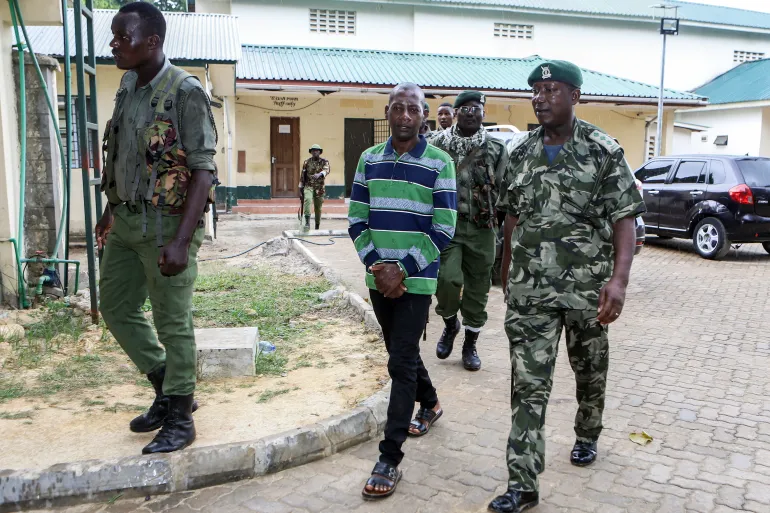
Self-proclaimed pastor Paul Mackenzie (centre) walks surrounded by police officers as he appears at the Shanzu Law Courts in Mombasa, Kenya on January 18, 2024 [File: AFP]
AKenyan self-proclaimed preacher and seven others linked to an infamous doomsday cult have been charged over the deaths of dozens of people whose bodies were discovered in shallow graves in southeast Kenya last year.
Kenya’s public prosecutions office said in a statement on X on Wednesday that it had charged Paul Mackenzie and other defendants with “organized criminal activity, two counts of radicalization (and) two counts of facilitating commission of a terrorist act” in relation to the “deaths of at least 52 people at Kwa Binzaro area in Chakama, Kilifi County.”
The defendants pleaded not guilty, with the next hearing in the case due on March 4.
“They are alleged to have promoted an extreme belief system by preaching against the authority of the government, adopted an extreme belief system against authority, and facilitated the commission of a terrorist act,” the prosecutor’s office said.
Mackenzie and others were already facing charges including murder and “terrorism” in connection with the deaths of people whose bodies were exhumed earlier from Shakahola Forest, in one of the world’s biggest cult-related disasters in recent history.
Prosecutors say Mackenzie and his Good News International Church organised a cult in which they ordered followers to starve themselves and their children to death to go to heaven before the world ended. Mackenzie has denied the accusations.
By 2025, two years after investigations began, prosecutors said more than 400 bodies had been recovered from Shakahola Forest, which is located in Kilifi County on Kenya’s east coast.
Autopsies revealed that the majority had died of hunger. But others, including children, appeared to have been strangled, beaten or suffocated.
Mackenzie pleaded not guilty to multiple counts of manslaughter at a first trial in Mombasa and has remained in custody ever since.
But last year, more bodies were discovered in the remote village of Kwa Binzaro, around 30km (20 miles) from Shakahola along the Indian Ocean coast.
Prosecutors say Mackenzie masterminded and oversaw the offences at Kwa Binzaro, continuing to direct them after his detention in 2023 and using methods that included radical teachings to draw victims to the remote site.
The grisly case has led the Kenyan government to flag the need for tighter control of fringe denominations in the majority-Christian country. Separate reports by the Senate of Kenya and a state-funded human rights watchdog also said the authorities could have prevented the deaths.
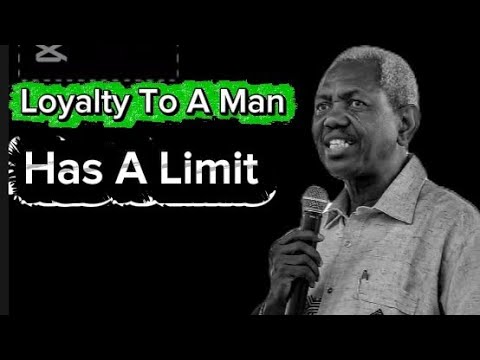
You don’t stick to a man at the expense of Christ. We stick to men because they are sticking to Christ. And we follow them because they are following the fundamental principles.
And we are following in building relationships, particularly in Christ. The person you come to know is not your pastor, it’s not your teacher, it’s him. It’s Christ.
Interviewer: ‘Okay, so you follow any man as long as he is following Christ.’ Gbille: ‘That’s all right. The rule is imitate me as I imitate Christ, isn’t it? So if you follow that as a principle, what it means is that as long as a leader continues to mirror Christ to me, continue to help me see Christ’s life and is pointing me to Christ, I’ll follow him.
But if I follow a leader, I’ve been following him, then we came to a junction and he branched off. But he has told me where we are going. And I’ve seen the road, but he has branched off now and he’s going to the dungeon.
Is it right for me to follow him to the dungeon? No, it’s not that I’m not loyal to him. I’m loyal to him to the extent that he’s loyal to Christ. So your loyalty to a man must be regulated by his own loyalty to Christ.
So if his loyalty to Christ is compromised and consistently, even after you have entreated him, there’s a space where you can talk to your leader, you can share with him. They rebuke not an elder, but entreat him as a father. There are some leaders that will go, I’ll prostrate for them.
I say, sir, I’ve been following you. You have been a great example to us. But this thing you are doing, do you know it is destroying all that you stood for for years? Please, I beg you, don’t do that again.
There are people like that that we went secretly. We begged them, please don’t go this way. Because we did it with humility.
Some of them listened and they said, Kai, God has used you to help me. There are those that we went and spoke to. They said to her, all right, if a man is going to hell, must I follow him to hell? Particularly when he is not the author and finisher of my faith.
So the first thing to say is loyalty to men is a subset of your loyalty to Christ. And because it’s a subset, it doesn’t stand on its own. You don’t stick to a man at the expense of Christ.
We stick to men because they are sticking to Christ. And we follow them because they are following the Lord. And we are following them in order to follow the Lord.
You understand? So that’s what the Bible says. And that principle is what must govern our relationships. It’s what must determine our relationship.
Now, but the other thing I must add to it is that commitment. Commitment to the word of God. Commitment to Christ’s life.
Commitment to principles is the first thing we must achieve in relating with leaders. See, don’t commit yourself to something that is faulty. If a teacher has been teaching me, and I went to sing the Bible, and I saw that this teaching is not congruent with the Bible, not because I’m anxious, not because I’m ambitious, not because I want to go.
I don’t want to go. I want to be with you. But I’m with you because you are with Christ. So that commitment is what we should look for.’
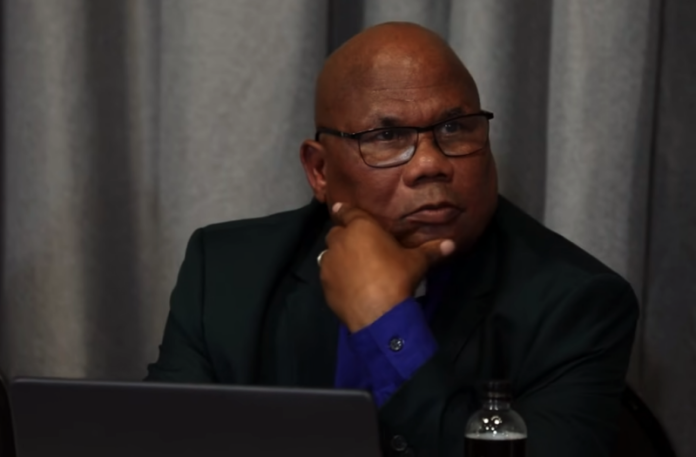
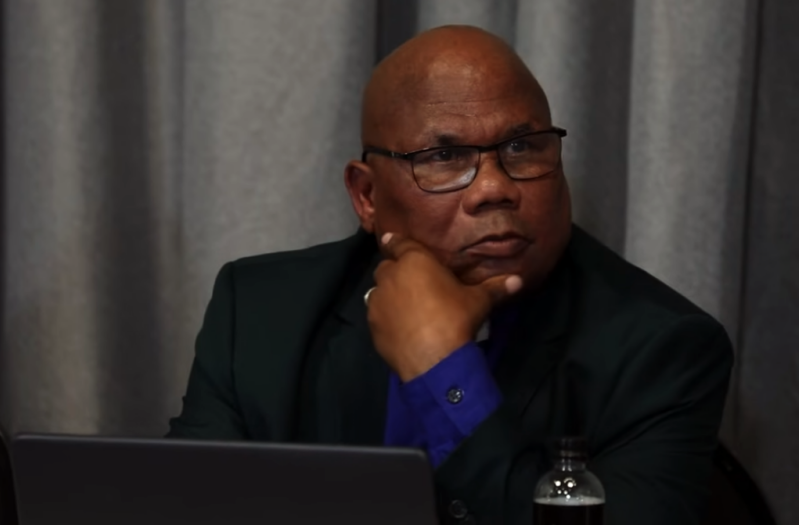
Professor Musa Xulu resigned as the chair of the CRL Section 22 Committee after he alleged that there was a pre-determined agenda to control religious activities. Youtube Screenshot / Eyewitness News
A Christian civil liberties group has accused South Africa’s Commission for the Promotion and Protection of the Rights of Cultural, Religious and Linguistic Communities (CRL Rights Commission) of misleading the public about its intentions toward churches, warning that a proposed “self-regulatory” framework masks a deeper push toward state regulation of Christian institutions.
At the center of the dispute is the CRL Rights Commission’s Section 22 Draft Self-Regulatory Framework for the Christian Sector, developed through a special ad hoc committee. The Commission has repeatedly insisted that it is not seeking to regulate churches, describing the initiative as voluntary and consultative.
In a statement issued on Jan. 22, the South African Church Defenders (SACD) said it was “deeply concerned” by a recent media briefing held by the CRL Rights Commission. According to SACD, the briefing failed to provide a truthful account of the Commission’s own documents and public record.
“The public was presented with statements that directly contradict the Commission’s official documents,” the group said, describing the briefing as deceptive rather than merely unclear or poorly communicated.Stay informed with The Christian Daily NewsletterSign up
In a press briefing on Jan. 21, the commission responded to a statement made by the former chairperson Professor Musa Xulu, who had alleged that there was a pre-determined agenda to control religious activities through the state.
The SACD group points specifically to clause 2.3 of the draft framework, which calls for nationwide consultations toward the development of a legislative framework for the Christian sector. SACD says this clause directly contradicts public claims that no legislation is being pursued.
“SACD rejects as false and misleading the claim that the CRL Rights Commission is not pursuing legislation or a legal framework for the Christian sector,” the statement reads. “This denial is directly contradicted by the Commission’s own draft framework.”
According to SACD, the framework is designed to establish sector-wide regulatory bodies, enforce registration of Christian institutions and leaders, and impose binding codes of conduct. While the Commission has framed these measures as part of a self-regulatory process, SACD argues that they amount to regulation in substance, if not in name.
The group accused the Commission of presenting “self-regulation” as a public-facing concept while quietly advancing mechanisms that would ultimately place churches under state-linked control. “This is a direct contradiction between what the Commission says and what it is doing,” SACD said.
SACD warned that once a legal framework is drafted, the process would move through consultations and eventually to recommendations to Parliament. At that stage, the group said, lawmakers could be presented with a record suggesting broad participation and consent, making approval more likely.
“This is precisely how legislation is formulated,” the statement said, urging churches to remain vigilant and oppose the process early rather than after it has gained momentum.
The organization also took aim at the tone and purpose of the CRL Rights Commission’s media briefing, suggesting it was an exercise in damage control rather than a genuine attempt to engage critics following the resignation of Xulu.
Without quoting Xulu directly, SACD said efforts to discredit his concerns only deepened public unease about the process. “Institutions of Chapter 9 stature are meant to uphold the highest standards of moral authority and public trust,” the statement said, adding that contradiction and concealment undermine the legitimacy of both the institution and its work.
For these reasons, SACD reiterated its call for the immediate removal of the CRL chairperson and the disbandment of the Section 22 Ad Hoc Committee.
The group said it was “totally opposed” to any legal or legislative framework that seeks to regulate Christian belief, governance, leadership, or practice. Religious freedom, it said, is protected by South Africa’s Constitution and cannot be subordinated to state-controlled structures, even under the banner of consultation or accountability.
SACD also sought to clarify what it sees as a mischaracterization of its position. It rejected claims that its opposition centers on a government White Paper, saying instead that its concerns relate to constitutional limits, lawful process, and the scope of authority granted to the CRL Rights Commission.
“The case is about the constitutionality of the Section 22 Ad Hoc Committee, the failure to follow proper lawful processes, and the protection of freedom of religion,” the statement said.
While the January statement itself does not announce new legal action, SACD’s position must be understood against a broader backdrop of public conflict between church groups and the CRL Rights Commission.
Previous media reports have documented that SACD and allied church leaders have, in recent months, challenged the Commission’s actions through legal channels, arguing that earlier attempts to regulate religious institutions exceeded constitutional boundaries. Those cases and applications have been reported by several South African news outlets and have framed SACD as one of the most vocal opponents of expanded CRL oversight.
In separate reporting, the CRL Rights Commission has defended its approach, saying the framework is intended to protect congregants from abuse and exploitation and to promote ethical leadership within faith communities. The Commission has insisted that participation would be voluntary and that it has no intention of policing doctrine or belief.
Other church bodies have taken more cautious or mixed positions. The South African Council of Churches (SACC), for example, has acknowledged concerns about abuse within religious spaces while urging dialogue rather than confrontation, according to previous public statements reported in the media.
The resignation of Professor Xulu has further intensified scrutiny of the Section 22 process. The former Chair of the commission described internal tensions and confusion over the committee’s mandate, reinforcing claims that the initiative has been poorly defined and contested even among its architects.
For SACD, however, the issue is not one of internal disagreement but of constitutional principle. The organization says the CRL Rights Commission cannot deny legislative intent while advancing documents that explicitly call for it.
“South Africans are entitled to honesty, clarity, and constitutional fidelity,” the statement concluded. “The CRL Rights Commission cannot publicly deny its legislative intentions while advancing a framework that expressly calls for them.”
SACD said it remains committed to defending religious freedom, constitutional supremacy, and the rule of law.
South Africa’s move would mirror steps being taken or considered elsewhere on the continent. Kenya is mulling the introduction of laws that would oversee religious organisations, including stricter registration, financial reporting, and state oversight following cases of abuse and exploitation. Rwanda has already implemented tight regulations that require faith-based groups to meet strict registration, leadership, and safety standards, with authorities closing thousands of churches that fail to comply.
Pastor John Michael Okoel and his assistant pastor of Pallisa, Uganda were beaten for their faith on Jan. 30, 2026. Morning Star News
Two pastors were discharged from a hospital in eastern Uganda on Sunday (Feb. 8) after a group of Muslim extremists beat them more than a week before, sources said.
Pastor John Michael Okoel and Assistant Pastor Abraham Omoding of New Life Church in Pallisa, about 200 kilometers (120 miles) northeast of Kampala, were returning home from an all-night prayer meeting at 4 a.m. on Jan. 30 when five masked men dressed in Islamic attire stopped them at Osupa Swamp along the Pallisa-Mbale Highway, Pastor Okoel said.
The attackers were armed with sticks and knives when they confronted the pastors, accusing them of blasphemy and attempting to convert Muslims, he said.
“They began accusing us of lying about Allah, preaching that Allah has a Son and converting their brothers and sisters,” Pastor Okoel told Morning Star News. “Before I could respond, one of them, Ali Kitaali, slapped me, cut me near my mouth and hit my knee and hand. I fell unconscious.”Stay informed with The Christian Daily NewsletterSign up
The assailants threatened to kill them and appeared determined to end their lives, he said.
“They then attacked my assistant pastor, fracturing his arm, knocking out two teeth, and beat him badly on the back,” Pastor Okoel said.
Their ordeal ended when a vehicle approached from the opposite direction and flashed its headlights, causing the assailants to flee, he said.
Those in the vehicle stopped to help and rushed the wounded pastors to a nearby clinic, where they received emergency aid. Relatives and church members later arrived and helped transfer them to Mbale Regional Referral Hospital for further treatment.
Both pastors were continuing to recover at home. They said they intend to report the attack to police once they are physically able to do so.
Church leaders and community members expressed deep concern over the attack. A neighboring pastor who requested anonymity described it as “deeply disturbing,” calling on authorities to investigate and ensure justice.
“No religious leader should fear for their life because of their faith,” he said.
Area residents said the assault has heightened fear and anxiety in the area, particularly among Christian leaders.
“This attack has shocked the community,” said one Pallisa resident. “If such violence is not addressed, it could threaten peaceful coexistence.”
The attack highlights ongoing religious tensions in parts of eastern Uganda. At this writing police had not issued an official statement, and no arrests had been reported.
The attack was the latest of many instances of persecution of Christians in Uganda that Morning Star News has documented.
Uganda’s constitution and other laws provide for religious freedom, including the right to propagate one’s faith and convert from one faith to another. Muslims make up no more than 12 percent of Uganda’s population, with high concentrations in eastern areas of the country.